Factfulness: We're All Wrong About the World
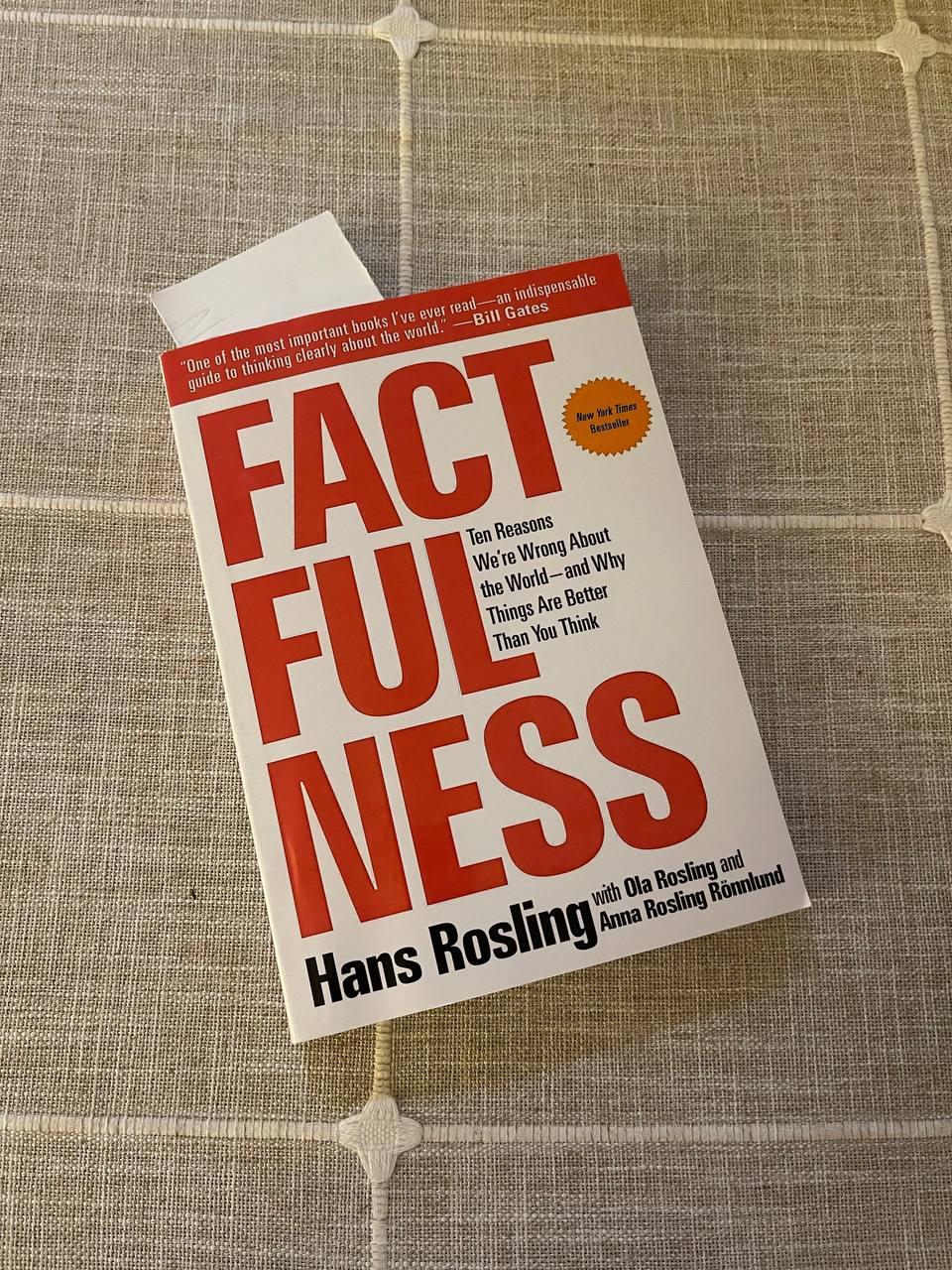
Factfulness: Ten Reasons We're Wrong About the World — by Hans Rosling
The Humbling Quiz
I've always thought of myself as someone who keeps up with world issues. But that confidence disappeared fast when I opened Factfulness. The book begins with a quiz about global facts, things like poverty, population, health, and education. I assumed I knew the basics. I got only a third right.
In most quizzes, that score basically means you're guessing. Almost clueless.
What surprised me was the next part. Rosling gave this same quiz to people all over the world, on every continent, among all kinds of professions and education levels. On average, they scored worse than random. People weren't just uninformed, they were consistently wrong. If you literally threw darts at the answers, you'd do better than most people.
So the problem isn't just missing facts. Something deeper is off in how we see the world.
Splitting the world in two
Rosling's first big point attacks one of our strongest habits: the need to divide everything into two groups. Rich vs. poor, developed vs. developing, that kind of split.
That way of thinking made sense about 60 years ago, when countries were truly far apart in living standards. But the world has changed a lot. Nations have moved closer together in many ways. The gap has narrowed, even though our old mental picture hasn't.
The issue with binary thinking is that it crushes a huge variety of real situations into a simple cartoon. People in wealthy countries often assume everyone in "developing" countries lives in extreme poverty. But inside that label are several very different levels, with big differences in daily life.
When we hear "developing country," our minds jump straight to hardship. We miss the growing middle class, improving roads, and steady progress happening in most places. Binary thinking oversimplifies to the point of getting things wrong.
The Extremes Get All the Attention
Another mental trap: our natural pull toward extremes. That's where the drama is. The shocking stories, the memorable images, the headlines. A village without clean water. A billionaire's luxury. Those extremes grab the spotlight.
But the most useful information, the stuff that actually helps you understand the world, sits in the middle. The normal, the steady, the majority. Slow improvements never make the news because "things got slightly better again today" doesn't excite anyone.
Rosling keeps guiding our attention back to this middle ground. Not to ignore suffering, but to remind us that extremes are not typical. Most of humanity lives somewhere between disaster and abundance, slowly moving upward.
The Negativity Instinct
We idealize the past because we forget how rough it actually was. Meanwhile, the news feeds us daily stories focused almost only on problems.
Good news about gradual improvement doesn't attract clicks. "Child mortality falls again" can't compete with dramatic events. So we walk around thinking everything is getting worse, even though most long-term trends show big improvement.
This is the data talking, not wishful thinking. And it tells a story of progress our instincts don't want to accept.
A workout for how you think
Reading Factfulness reminded me of The Black Swan by Taleb. Both books work like mental training, upgrading your thinking to handle a complicated world. They teach not just facts, but better ways to evaluate facts.
What makes Factfulness so powerful is how Rosling mixes solid data with personal stories from decades of working as a doctor and global health expert. He practiced medicine in Mozambique, visited Indian villages, and saw health systems in many countries. So it isn't theory, it's what he actually lived through.
As someone who travels a lot myself, I found those stories especially convincing. His firsthand perspective adds a kind of honesty and depth that pure statistics can't match.
What it's really for
Factfulness won't cheer you up. It just makes you see the world a bit straighter. Rosling shows that our wrong view of the world leads to bad decisions, from personal stress to poor public policy.
The world isn't as hopeless as it looks. Progress is real, steady, and measurable. But our instincts (binary thinking, love of extremes, and negativity) hide this progress from us.
The solution isn't to memorize more facts. It's to understand why we misread the facts we already have, and to train ourselves to correct these habits. That's what factfulness is.
If you've ever caught yourself idealizing the past, doom-scrolling through bad news, or thinking in "us vs. them," this book is worth reading. It won't make you optimistic so much as accurate.
And weirdly, being accurate left me feeling better, not worse.