South vs North: India's Great Divide
South vs North: India's Great Divide — by R.S. Nilakantan
I picked up this book at the Chennai airport. I wanted something small to fit in my backpack, but also something that would give me a clear view of numbers and regions across India during my trip. My route was mostly a South India tour: Bangalore → Chennai → Hyderabad → Kolkata (I'm not sure if it's a perfect south).
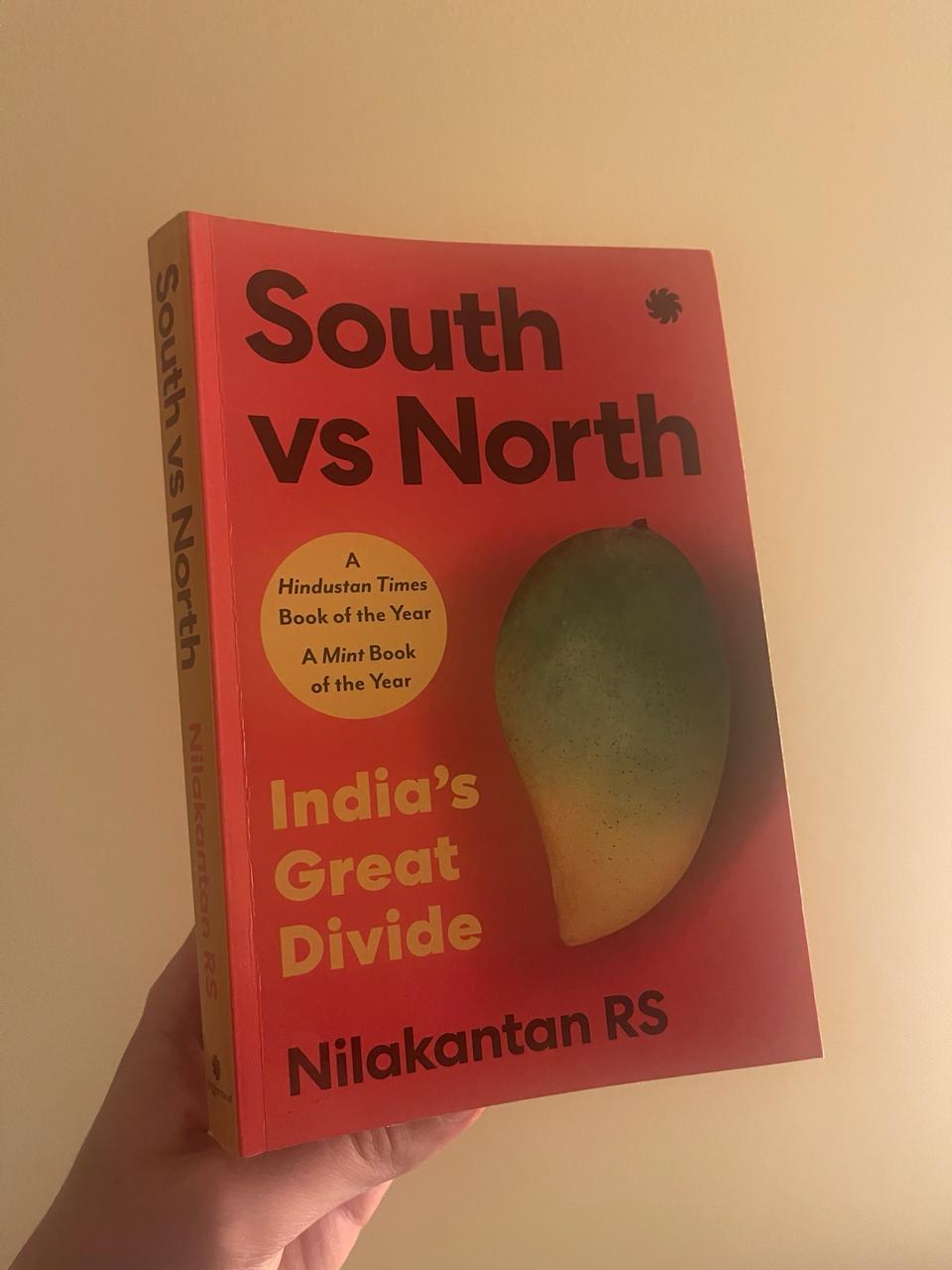
The title made sense for the trip, even if I wasn't sure I'd agree with all the arguments inside.
First impressions, and why I kept reading
At first, I was a bit skeptical. The idea that a big country like India has regional economic differences isn't new, Italy or Japan show the same patterns. But the book had charts, tables, and clear numbers, which made me want to see the "data side" of India, not just what I experienced on the streets.
Learning more about rice and wheat
The book goes into agriculture in detail. It was interesting to see actual numbers for rice and wheat yields. India's productivity per hectare is below the global average, but some states rely more on agriculture in their economy, even if productivity is lower. Seeing these patterns helped me understand why some regions are poorer and invest less in technology or infrastructure.
It wasn't shocking, but it was useful to get a clearer picture.
Why local governance matters
One thing that stood out is how much local governance shapes outcomes. The most successful states today weren't necessarily always strong. Policies, experiments, and small adjustments often compounded into growth. What works in Kerala doesn't automatically work in Bihar, and vice versa.
What worked usually came from local choices on the ground, not grand national plans.
Understanding the numbers without over-dramatizing
The book ends with discussions on potential solutions to reduce regional disparities. I'm not an expert, so I don't take these as instructions. The proposals are high-level and can't capture India's full complexity. But they give a sense of where policymakers are focusing attention.
What I got out of it
The book works well as a numbers-driven overview. I learned a lot about agriculture, state histories, demographics, and regional differences. But the conclusions are more like informed opinions than definite answers.
It gave me a clearer numbers-picture of India's regions, and not much more. It won't "solve" anything, and it doesn't pretend to.