The Soul of Malaya
The Soul of Malaya (Malaisie) — by Henri Fauconnier
Back in February I spent some time in Malaysia, and I completely fell in love with it. I've become that guy now - the one going around telling every friend and colleague that they need to get out there, soon, no excuses. A real fan now.
So when I found this book, I saved it for after I got home, for the moment I'd start missing the place. That moment came fast.
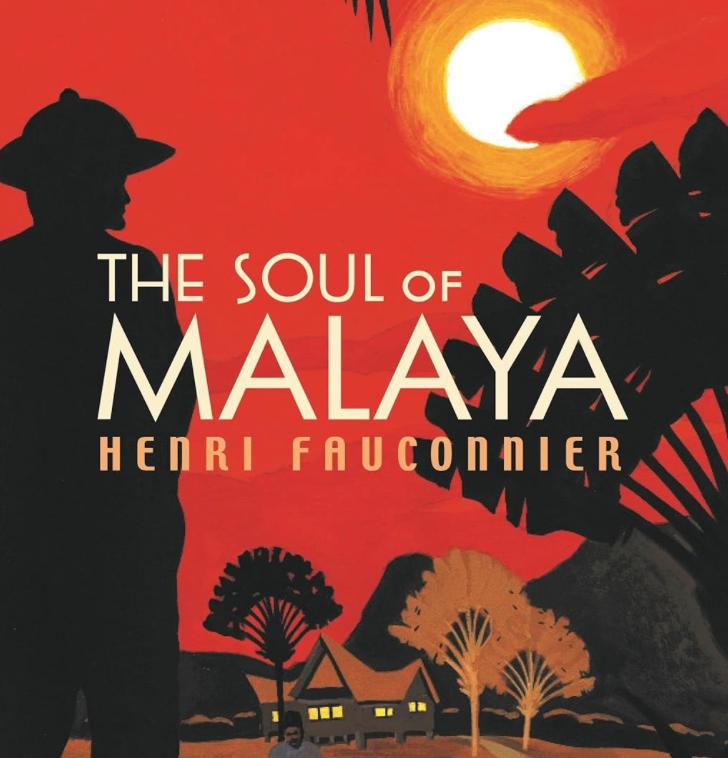
The Soul of Malaya is a strange, lovely little thing. It was written by Henri Fauconnier, a Frenchman who actually lived it - he ran rubber plantations in colonial Malaya in the early 1900s. It reads less like a novel and more like a memoir. There's a narrator, Lescale, a disillusioned Frenchman who comes out to run a rubber estate, and Rolain, an older, half-mystical planter he first met in a shell-hole in the First World War and then bumps into again out in the jungle. And there are two Malay brothers, Smail and Ngah, who work for them and who, quietly, become the real heart of the book. For most of it not much "happens" - it wanders, it reflects, it describes - and then the last stretch turns suddenly dark. Mostly it's two Frenchmen slowly trying to understand a country through its people.
What got me most, reading it fresh off falling in love with Malaysia, is how much has changed in what is really just a hundred years. The Malaya in this book - the jungle, the little kampung villages, the untouched land - is almost unrecognizable next to the country I walked around in February. A century isn't very long, and yet it swallowed a whole world.
Now, this is very clearly a white European man looking at all of it through the eyes of his time. And I'll be honest: the way he describes local life often feels more primitive and simple than it surely actually was. Though there's something interesting in that too - it's an outsider's view, and outsiders notice strange things a local never would. If I sat and really chewed on the author's line of thinking, his attitude, some of the things he says, I'd walk away with a pretty negative impression.
But I think that's the wrong way to read a book like this. You have to step back a bit and not judge a man from a hundred years ago by my 21st-century eyes. I'm fairly sure people in the 22nd century, if they ever dig up things I wrote, will be just as horrified at what kind of person I was. So you abstract a little, you enjoy it, and mostly you watch for the details and the mood of the era. Read that way, an old sketch like this turns into a nice way to study history - you feel the time, you don't just read about it.
The thing I keep coming back to is underneath all the dated bits: the narrator is honestly curious about the culture of a people he doesn't know. He doesn't understand a lot of it, and he'd be the first to admit that, but he wants to, he tries, and he treats it all with real warmth. That, to me, is worth a great deal. It's the best and most beautiful thing in the book.
It's also short - I got through it in a couple of evenings. Which is partly why I won't dwell on the things I didn't like: they were there, but they were brief, and they passed.
Just go to Malaysia. Visit at least two cities besides Kuala Lumpur, wander around the strange, non-touristy corners, take your time - and I'm pretty sure you'll fall in love with it too. Then pick up a book like this one. It doesn't have to be this exact one; any old account by a traveler from another era will do. It'll be wonderful.